Puppy Vaccinations in the UK: What to Expect
When puppy jabs usually happen in the UK, what the core vaccines cover, and how to keep the card safe once the plastic wallet inevitably goes missing.
By Tony Dalton · Updated
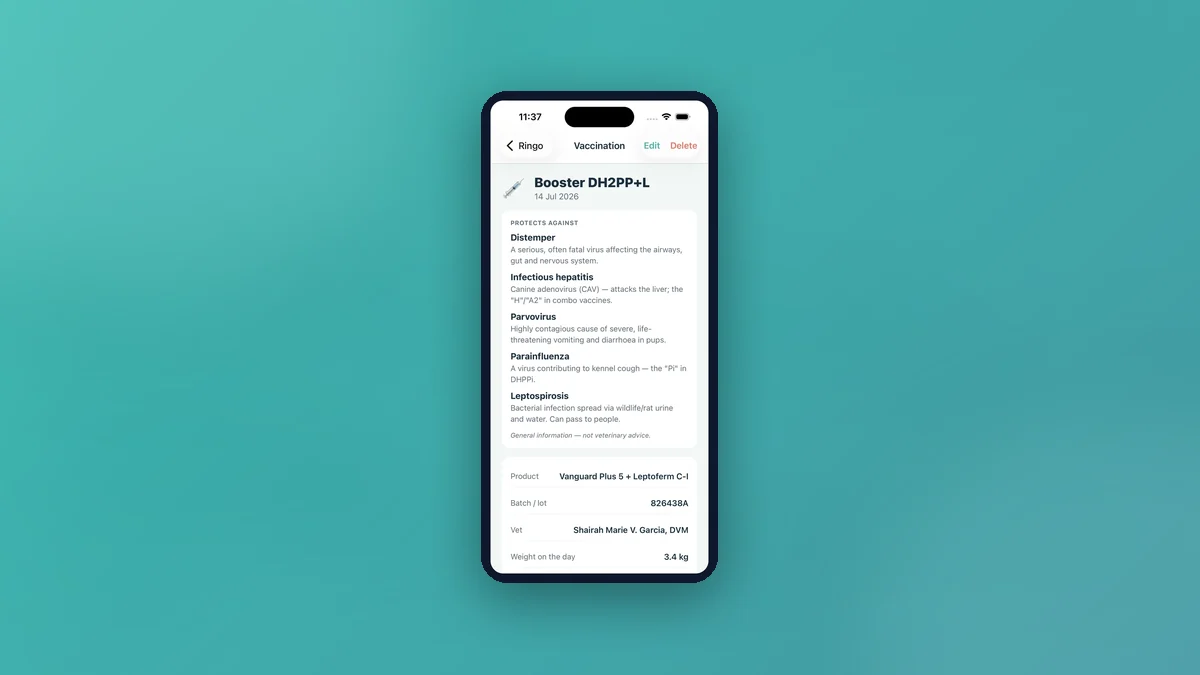
Most UK puppies get their first vaccination course in two visits a few weeks apart, usually starting somewhere between six and ten weeks old, with a booster about a year later. The exact ages, the exact products and the exact intervals are your vet's call — they vary by brand, by practice and by the individual dog. What follows is general background so the conversation makes sense, not a schedule to follow.
What the first course usually covers
In the UK, the core canine vaccines a puppy is typically offered protect against distemper, hepatitis (adenovirus), parvovirus and leptospirosis. You will often see the first three abbreviated together on the card as DHP, or DHPP when parainfluenza is included. Leptospirosis is normally given alongside, and comes in more than one version — see Lepto 2 vs Lepto 4 for what those numbers mean.
Non-core vaccines are offered based on how the dog actually lives. Kennel cough (bordetella) tends to come up if the dog will be boarding, going to daycare or mixing at classes. Rabies only matters for travel.
Why the second appointment matters more than it looks
A first jab on its own is not the finished course. Puppies carry antibodies from their mother that fade at an unpredictable rate, and those antibodies can blunt a vaccine's effect. The second dose exists to catch the window after the maternal antibodies have gone. Missing it, or leaving it far too long, is the sort of thing worth a phone call to the practice rather than a guess.
When a puppy can go out
Vets usually give a window after the final dose of the primary course before full outdoor freedom. Ask your practice for their number and write it down — it is the single most-asked question of the first month, and it is the one nobody can ever remember afterwards.
The paperwork problem
Every puppy owner is handed a small card, often in a plastic wallet, with handwritten dates and a set of peel-off batch stickers. It is the only record you have, it is not backed up anywhere you control, and it lives in a kitchen drawer for the next fifteen years.
That card matters more than it looks. A boarding kennel will ask for it. A groomer may ask. A new vet will want the history. An insurer may want it after a claim. And the person most likely to be asked for it — a partner, a parent, a sitter — is often not the person who put it in the drawer.
Keeping the record somewhere it survives
CorePaw stores vaccinations as proper health records: date, product, batch or lot number, the vet, the weight on the day and any notes. You can photograph the card and let the app's AI card scan pull the entries out for you to check before saving — it deliberately never imports "next due" dates, because a number printed on a vial is often an expiry, not a due date, and importing that automatically would be worse than useless.
Recognised vaccines show a plain-language breakdown of what they protect against, for cats as well as dogs, clearly marked as general information. When a record has a real next-due date on it, the app can remind you a week ahead and again on the day.
The point is not that an app remembers better than you do. It is that the record stops living in one drawer, in one house, known to one person. Everyone in the household sees the same history, and when a vet asks, the summary is one tap away.
This article is general information about how vaccination records work, not veterinary advice. Your vet decides what your dog needs and when.
Related articles
Keep your pet's whole record in CorePaw.
Passport, microchip, vaccinations, medications, walks and weight — working offline and shared with your household. Free for your first pet, on iPhone and Android.