Cat Vaccinations: FVRCP, FeLV and the Card
What the abbreviations on a cat's vaccination card stand for, how indoor life changes the conversation, and why the record is worth keeping properly.
By Tony Dalton · Updated
FVRCP is the combined core cat vaccine: feline viral rhinotracheitis (herpesvirus), calicivirus and panleukopenia. FeLV is feline leukaemia virus, given separately and usually offered based on whether a cat goes outside or lives with cats who do. Which of these your cat should have, and when, is your vet's decision.
Decoding the card
Cat cards are as abbreviated as dog cards, and the shorthand is less familiar to most owners. Common entries include:
| On the card | What it refers to |
|---|---|
| FVRCP, RCP, "tricat" | The combined core vaccine — herpesvirus, calicivirus, panleukopenia |
| FeLV | Feline leukaemia virus |
| Chlamydophila / Chlamydia felis | A bacterial cause of conjunctivitis, sometimes included |
| Rabies | Travel only, in the UK |
The two components people mix up
Panleukopenia is sometimes still called feline infectious enteritis, or feline parvovirus — three names for the same thing, which is a large part of why cat cards confuse people. And "cat flu" is not one disease: it usually refers to herpesvirus and calicivirus together, both of which are in the core vaccine.
Indoor cats
Indoor cats are not in a separate category with no risks, and the calculation is more nuanced than "she never goes out". Panleukopenia is very durable in the environment and can be carried indoors on shoes and clothing; an indoor cat may still need boarding, may still escape, and may still meet a new cat when the household changes. FeLV is the vaccine where indoor-only life genuinely changes the discussion, because transmission is largely cat-to-cat.
This is a conversation to have with your vet about your cat, not a rule. What is worth doing on your side is making sure the vet actually knows how the cat lives.
Recording how a cat lives, not just what it had
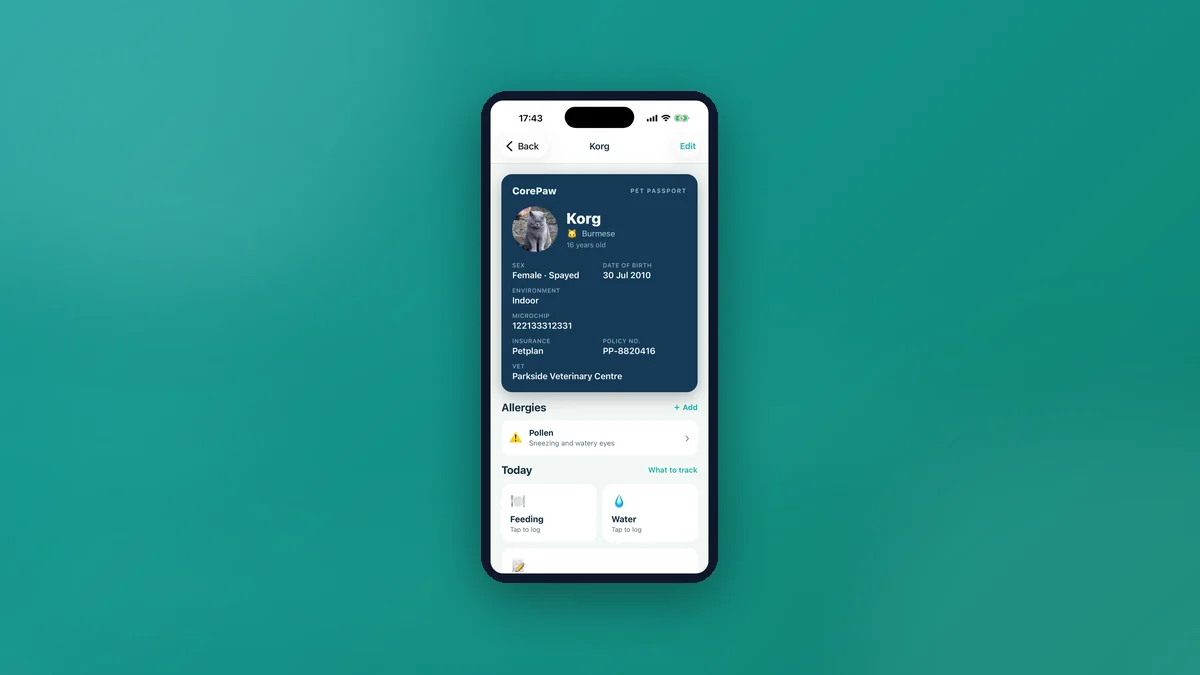
CorePaw's digital passport records living environment — indoor, outdoor, or both — as a field on the cat, precisely because it changes the parasite and vaccination conversation and because a vet or a sitter benefits from seeing it. The app is species-aware throughout: a cat's activity tracker is called Activity rather than Walks, its toilet tracker reads Litter, and the vaccine information covers cat vaccines as well as dog ones.
Vaccination entries carry the product, batch or lot number, date, vet and weight on the day. The AI card scan reads cat cards as well as dog cards. Recognised vaccines show a plain-language note on what they cover, marked as general information.
Why the record earns its keep
Cats change households more often than people expect — a move, a new partner, a period with a relative, a cattery booking made at short notice. The vaccination history is the piece of paper that is never where the cat is. Keeping it as a record rather than a card means that whoever is standing at the cattery desk has it, and that a printable summary exists without a trip home.
General information about vaccine terminology, not veterinary advice. Your vet decides what your cat needs.
Related articles
Keep your pet's whole record in CorePaw.
Passport, microchip, vaccinations, medications, walks and weight — working offline and shared with your household. Free for your first pet, on iPhone and Android.