Lepto 2 vs Lepto 4: What the Card Means
Your dog's vaccination card says L2 or L4. Here is what the numbers refer to, why UK practices differ, and why it belongs in your written record.
By Tony Dalton · Updated
L2 and L4 refer to how many strains of leptospirosis a vaccine covers: two or four. Both are used in the UK, both are licensed, and which one your dog has had is a fact about your dog worth knowing — particularly if you change practice, board your dog, or travel. Which is appropriate for your dog is a question for your vet.
What leptospirosis is
Leptospirosis is a bacterial infection spread mainly through the urine of infected animals, notably rats, and it survives in standing water, mud and slow-moving rivers. That is why it comes up so often for dogs who swim, work, or walk anywhere rural or waterlogged. It can also affect people, which is part of why it is treated as a core vaccine in the UK when much of the rest of Europe treats it differently.
Why there are two versions
L2 vaccines cover two serogroups. L4 vaccines cover four, adding coverage that reflects strains seen more recently in parts of Europe. Practices in the UK have taken different views on which to stock, and some changed their default at some point in the last decade — which is exactly why a dog's card can show L2 for its early years and L4 later, or the reverse.
What to look for on the card
Vaccination cards are handwritten and abbreviated, and the leptospirosis entry is often the least legible line on the page. You are looking for one of:
- A product name, which is the most reliable identifier
- L2, L, or Lepto 2
- L4 or Lepto 4
- A combined code such as DHPPi/L4, where the lepto component is bolted onto the core vaccine
If you genuinely cannot read it, the practice can tell you — it is in their clinical record even when your copy is illegible.
Why it is worth writing down
Switching between L2 and L4 is not always a straight swap, and a vet meeting your dog for the first time will want to know what has gone before. So will a boarding kennel. The problem is that this information exists in exactly one place: a card, in a drawer, in handwriting, in a house.
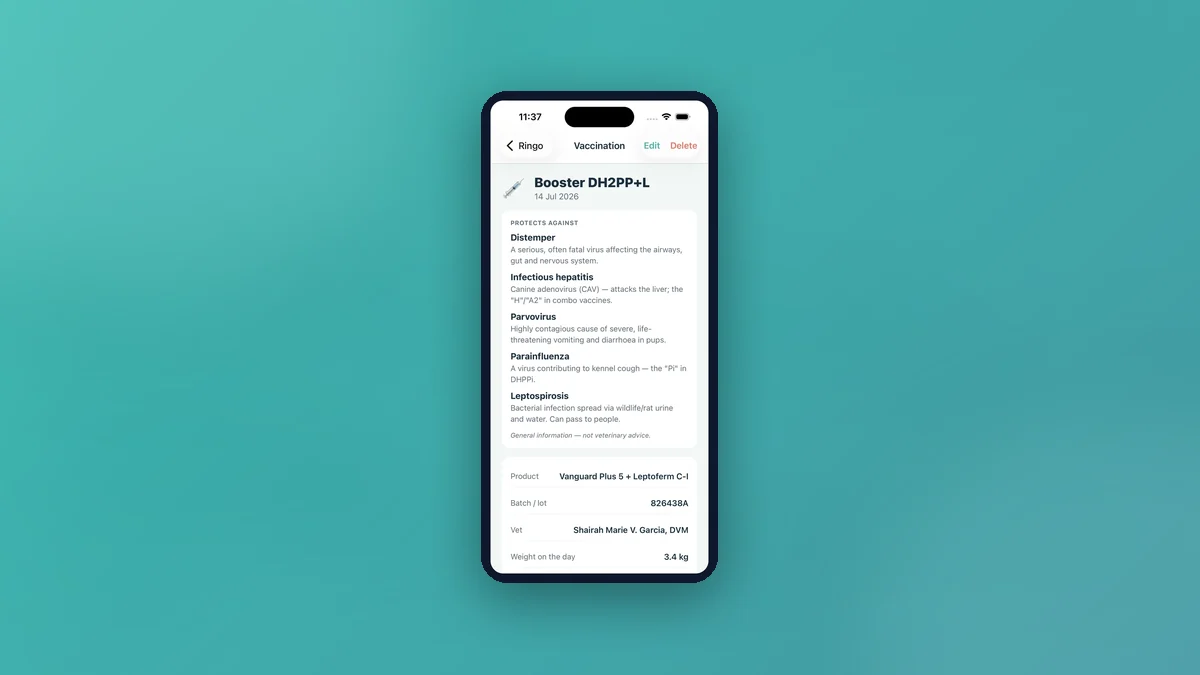
In CorePaw, a vaccination is a record with a product name, a batch or lot number, a date, the vet and the weight on the day. That last field matters more than people expect — weights recorded on vaccination visits are often the only regular weight history a dog has, and CorePaw can backfill a growth chart from them in one tap.
Recognised vaccinations also show a curated, plain-language note on what they protect against — for cats as well as dogs — clearly marked as general information rather than advice.
If you are changing practice
Take the full history, not just the last entry. A new vet asked "has he had lepto?" can do very little with "yes, I think so". A list of dates, products and batch numbers is a different conversation, and it is the conversation the vet health summary PDF was built for: identity, microchip, latest weight, allergies, the whole record history and current medications, on one printable page.
General information about vaccine labelling, not veterinary advice. What your dog should receive is your vet's decision.
Related articles
Keep your pet's whole record in CorePaw.
Passport, microchip, vaccinations, medications, walks and weight — working offline and shared with your household. Free for your first pet, on iPhone and Android.