Indoor or Outdoor: A Fact Worth Recording
Whether a cat goes outside changes parasite risk, vaccination conversations and what a sitter needs to know. It belongs in the record, not in your head.
By Tony Dalton · Updated
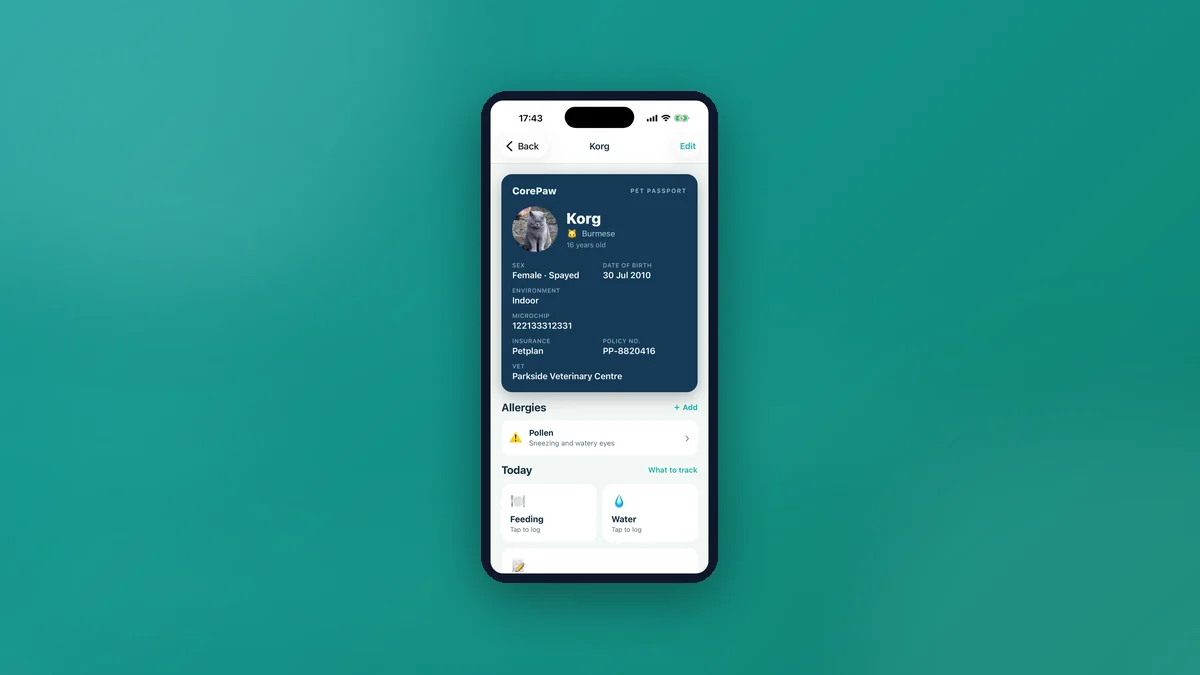
Whether a cat goes outside is one of the most clinically useful facts about it, and one of the least likely to be written down anywhere. It shapes the parasite conversation, feeds into which vaccines get discussed, and is the first thing a sitter or a relative needs to know before they open a door.
Why vets ask
An outdoor cat hunts, meets other cats, drinks from puddles and picks up passengers. An indoor cat does much less of that. The two are not in the same risk bracket for parasites, and the difference informs how often worming and flea treatment come up. Most owners answer this question from memory at each appointment, and the answer drifts.
It also matters for a cat whose circumstances have changed. A cat who was outdoor for six years and has been indoor since a move has a different history from one who has never been out, and that history is worth having in front of a vet who is meeting the animal for the first time.
Why sitters and family need it more
The stakes here are immediate rather than clinical. Someone feeding your cat for a week needs to know whether that cat is allowed out, whether it comes back, whether it uses a flap, and where it hides. Told once, over the phone, two weeks before the trip, that information does not survive.
CorePaw records these as facts about the animal rather than as a message to one person. For a cat you can note indoor or outdoor status, litter arrangements, and where they hide — written once on the pet, readable by anyone the pet is shared with. The screen says so explicitly, so there is no ambiguity about who can see it.
That framing matters. A note you send to one sitter helps one sitter. A fact on the pet helps the relative who pops in unexpectedly, the neighbour with the spare key, and next year's sitter who you have not met yet.
Where it sits in the app
Living environment — indoor, outdoor, or both — is a field on the digital passport, alongside identity, microchip number and registry, insurance details and vet practice. The passport is a card you can show, not a settings screen you have to navigate, and it works offline.
Because CorePaw is species-aware, a cat's passport shows indoor/outdoor status where a dog's would not, the activity tracker is called Activity rather than Walks, and the toilet tracker reads Litter. You can also hide any section that does not apply — the Activity section for a housebound cat, for instance — per pet, with the choice syncing across the household.
When it changes
The useful habit is updating it when life changes rather than at the next appointment: a house move, a new road, an illness, a cat flap fitted or blocked. It takes a moment, and it means the record describes the cat you have now.
See also: do indoor cats need vaccinations and what a pet sitter actually needs to know.
General information about record-keeping, not veterinary advice.
Related articles
Keep your pet's whole record in CorePaw.
Passport, microchip, vaccinations, medications, walks and weight — working offline and shared with your household. Free for your first pet, on iPhone and Android.