Tracking a Cat's Weight, and Why It Matters
A cat can lose a fifth of its body weight before anyone living with it notices. Weighing at home, charting the trend, and what a BCS actually is.
By Tony Dalton · Updated
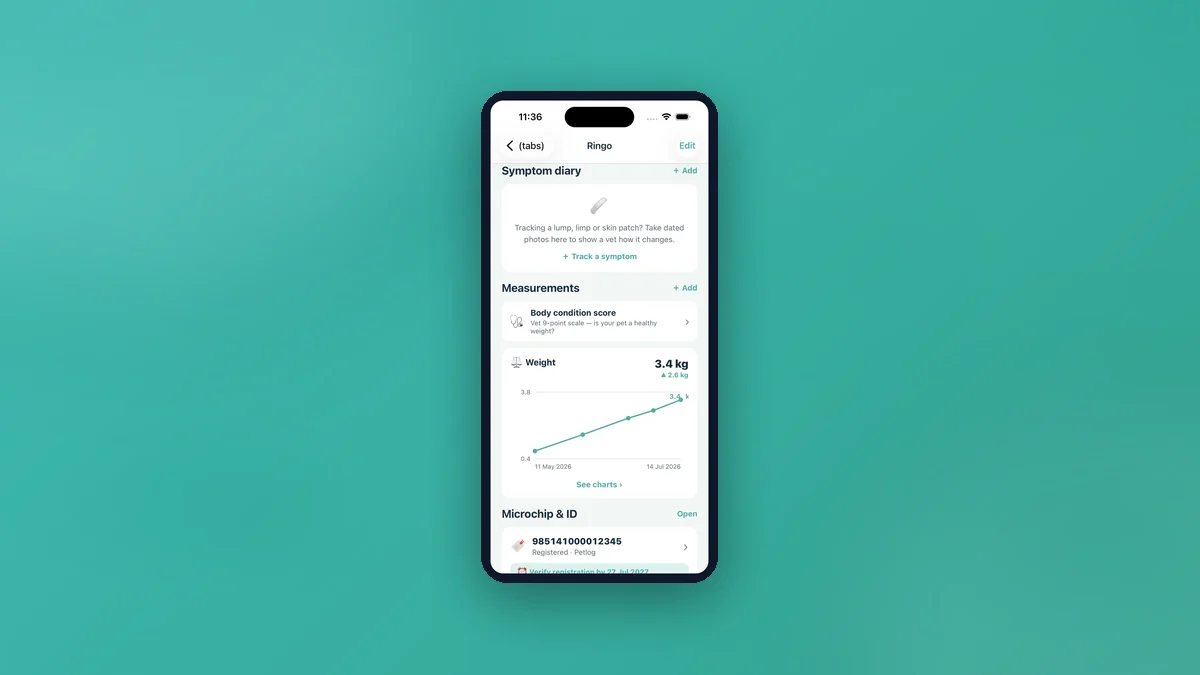
Weight change is one of the few things about a cat you can measure at home, and it is very hard to see by eye. A cat you look at every day changes too gradually to notice, and long fur hides a great deal. A number written down every few weeks catches what your eyes will not.
Weighing a cat at home
The simplest reliable method is to weigh yourself, then weigh yourself holding the cat, and subtract. Bathroom scales are imprecise at this scale, so treat any single reading with suspicion — it is the trend across several readings that carries the information. Weigh at roughly the same time of day, and note it immediately, because you will not remember it accurately in ten minutes.
Kitchen scales work well for kittens. Many vet practices will also let you use their scales without an appointment, which is more accurate and worth doing occasionally as a calibration.
What body condition score adds
Weight alone does not say whether a cat is the right shape. Body condition score is a nine-point scale, assessed by feel and by looking from above and from the side, where roughly 4 to 5 is the ideal band. It is what a vet is doing when they run their hands along a cat's ribs and spine.
CorePaw records BCS with a guided picker that describes each score for the species — dog and cat descriptions differ — and flags the ideal band. It charts over time like any other measurement and appears on the vet health summary PDF, so you can show the shape trend rather than only the weight trend.
Charting rather than remembering
CorePaw's measurements track any metric over time — weight, height, length, neck, chest, or a custom one with its own label and unit. Each series gets a line chart showing the latest value and the change since the first reading, with a mini chart on the pet screen and full charts on tap.
There is also a one-tap backfill that seeds the weight series from weights recorded on vaccination visits. For a lot of cats that is the only historical weight data that exists anywhere, sitting on the vaccination card, and pulling it in gives you a chart going back years rather than starting from today.
Why the household matters here
Weight in a multi-person household is complicated by feeding. If two people each feed the cat because neither is sure whether the other has, the intake is not what anyone thinks it is. CorePaw's daily care log stamps every feed with who logged it, and the food library holds brands, forms and optional kcal per 100g with default portions, so "a scoop" means the same thing to everyone.
Taking it to the vet
A weight chart is one of the more useful things you can hand a vet, because it converts a vague impression into a dated trend. Combined with the body condition score history, allergies, health records and current medications, it is all in the one-tap printable summary — built on your device and working offline.
General information about measurement and record-keeping, not veterinary advice. Unexplained weight change in a cat is a reason to ring your vet.
Related articles
Keep your pet's whole record in CorePaw.
Passport, microchip, vaccinations, medications, walks and weight — working offline and shared with your household. Free for your first pet, on iPhone and Android.