Litter Tray Changes Worth Writing Down
Changes in a cat's litter habits are often the first thing an owner notices and the hardest thing to describe accurately at the vet. Keep a record instead.
By Tony Dalton · Updated
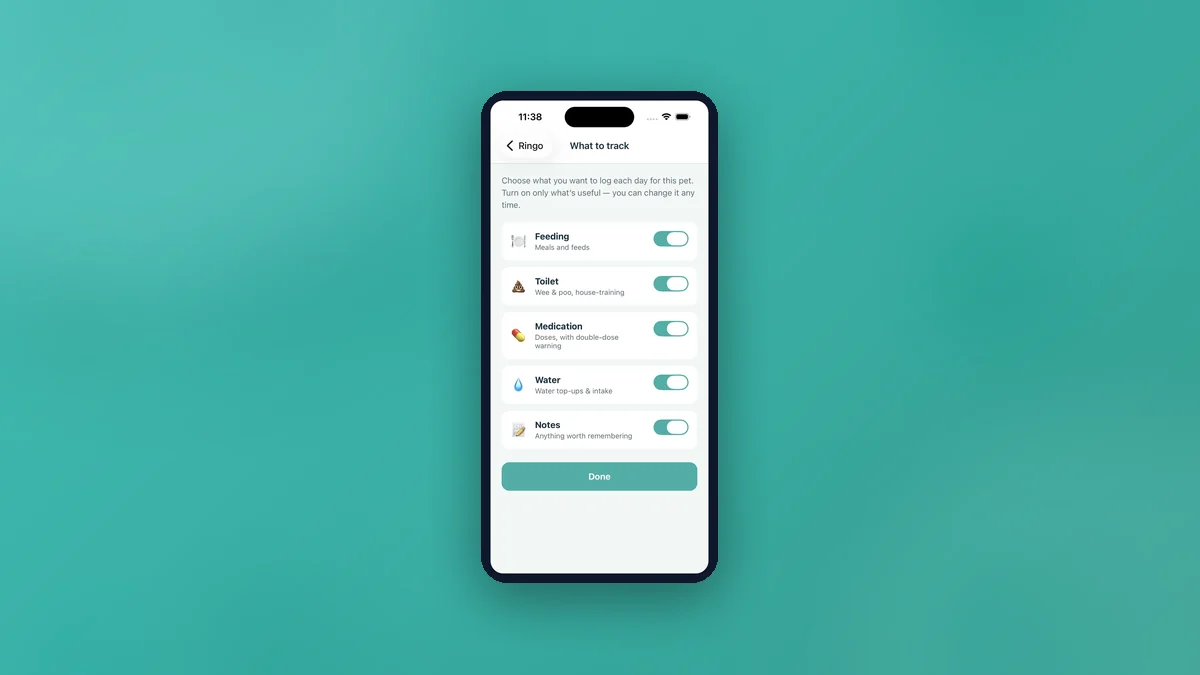
A vet asking "how long has this been going on?" is asking the one question an owner almost never has a good answer to. Litter tray changes are gradual, easy to rationalise and easy to misremember, and in a household where more than one person cleans the tray, nobody has the full picture. Writing it down as it happens is more useful than trying to reconstruct it afterwards.
None of this is a diagnostic guide. Any change that worries you is a call to your vet, and some changes — particularly a cat straining without producing urine — are genuinely urgent.
What is actually worth logging
You do not need a detailed diary. What helps a vet is frequency and consistency over time, and roughly when things changed:
- How often the cat uses the tray — up or down from their normal
- Wee, poo or both, since those change independently
- Consistency, where relevant
- Accidents outside the tray, and where
- Anything visibly different — straining, vocalising, unusually long visits
- What else changed — new food, a house move, a new pet, a different litter
The multi-person problem
In most households, the tray is cleaned by whoever gets to it. Each person sees a fraction of the picture and quietly assumes the rest is normal. This is why a change can run for three weeks before anyone says it out loud — not because nobody noticed, but because no single person noticed enough of it.
CorePaw's daily care log is built around this. One-tap tiles cover feed, water, med, toilet and note, with toilet detail recording wee, poo or both plus a consistency scale. For a cat the tracker is labelled Litter rather than Toilet, because the app adapts its vocabulary to the species throughout. Every entry is stamped with who logged it and when, and the history groups by day.
The effect is not that logging is more accurate in some abstract sense. It is that the household stops each holding a different quarter of the story.
Turning it into something a vet can use
Alongside the daily log, CorePaw's symptom diary handles anything you want to track deliberately over a period: give it a title, note where on the body if relevant, set a status of active, monitoring or resolved, and record when it started. You can add a dated photo each time you check, with an optional measured size, building a reverse-chronological timeline.
That diary — photos included — is embedded in the vet health summary PDF along with identity, microchip, latest weight and body condition score, allergies, health history and current medications. It turns "she's been a bit off for a while" into a dated record, which is a completely different consultation.
Weight is the quiet signal
Cats are good at hiding change, and weight moves before most owners notice anything. If you weigh your cat occasionally, chart it rather than trying to remember. A trend over six months is visible in a chart and invisible in memory.
General information about record-keeping, not veterinary advice. If you are worried about your cat, ring your vet.
Related articles
Keep your pet's whole record in CorePaw.
Passport, microchip, vaccinations, medications, walks and weight — working offline and shared with your household. Free for your first pet, on iPhone and Android.