What a Pet Sitter Actually Needs to Know
The note on the kitchen table covers feeding and forgets the vet, the microchip and the allergy. A checklist, and where the answers should live.
By Tony Dalton · Updated
Most sitter handovers cover food and the back door key, and omit everything that matters in an emergency: which vet, whether the animal is insured, what the microchip number is, and what she must not eat. Those are the four things a sitter cannot look up and cannot guess.
The checklist
- Vet practice name, address and phone. Plus the out-of-hours arrangement, which is often a different practice entirely.
- Insurance provider and policy number, if there is cover.
- Microchip number and database. The single most useful thing if the animal gets out.
- Allergies and intolerances, with how severe.
- Current medications — name, dose, times, and how it is actually given.
- Food — brand, portion, times, and what must not be given.
- How the animal should be handled — off the lead or not, recall, who they must not be walked with; for a cat, indoor or outdoor, litter, and where they hide.
- Your contact details and a second person's, in case you are unreachable.
Why a note fails
A note is written once, for one sitter, at the point of leaving. It is not updated when the medication changes. It does not exist for next year's sitter. And it is on the kitchen table, in the house, which is no use to someone standing in a vet's waiting room.
The deeper problem is that most of this is a fact about the animal, not a message to a person. "Do not let him off the lead" is true regardless of who is holding it.
Facts on the pet, not messages to a person
CorePaw records care instructions on the animal — off the lead or not, recall, who they must not be walked with; for a cat, indoor or outdoor, litter, and where they hide. Written once, and readable by anyone the pet is shared with, with the screen saying so plainly.
That means the relative who pops in unexpectedly and the neighbour with the spare key see the same thing as the sitter you briefed. Allergies sit right under the passport with severe ones flagged in red, and the passport itself carries microchip number and registry, insurance provider, policy and renewal, and vet practice and phone.
The one-page version
For a sitter who is not in your household, the vet health summary PDF is the practical answer: identity and microchip, latest weight and body condition score, allergies, health history, current medications and the symptom diary with photos. One tap, generated on your device, works offline, free for everyone. Email it or print it and leave it out.
For someone who needs to log care
If the sitter should actually record what they do, adding them to the household as a Member with ticked permissions is the better route — they can log feeds, walks and doses, each stamped with their name, and you see it as it happens. A label like "Sitter" keeps the household list readable, and access can be revoked afterwards. See how roles and permissions work.
A professional walker is different
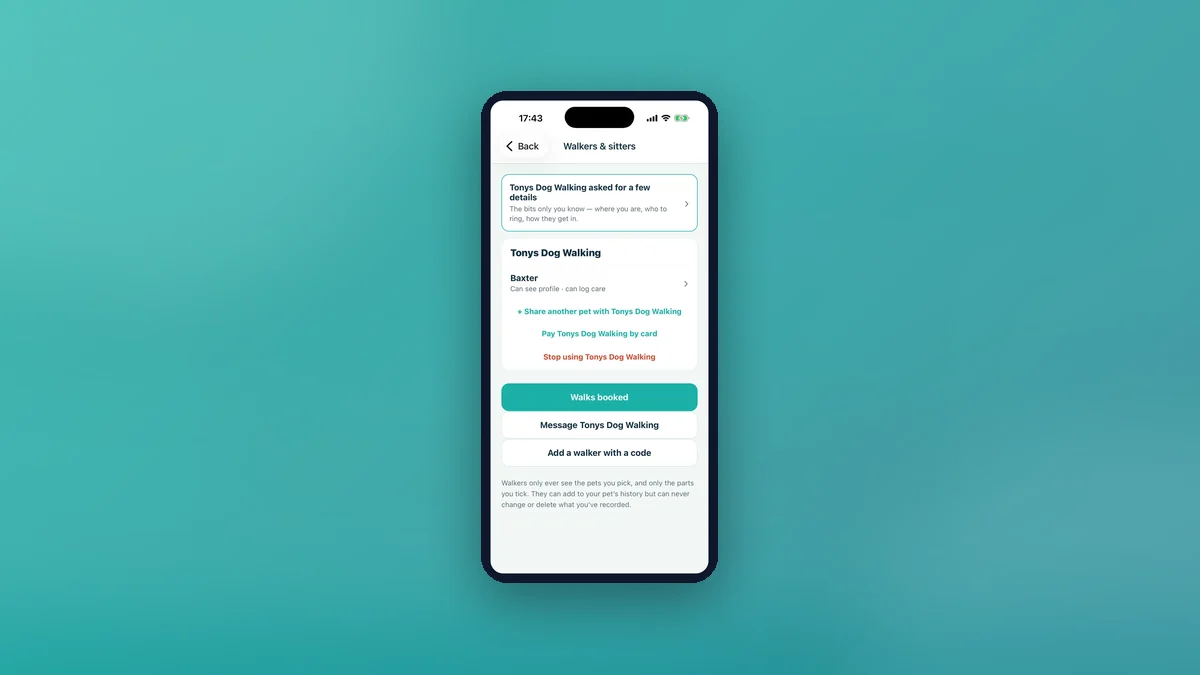
If the person is a dog walking or sitting business running on CorePaw Pro, sharing works differently and more precisely — per dog, per area, and never behind Premium for you. See sharing a pet with your dog walker.
General information about handovers, not veterinary advice.
Related articles
Keep your pet's whole record in CorePaw.
Passport, microchip, vaccinations, medications, walks and weight — working offline and shared with your household. Free for your first pet, on iPhone and Android.