What to Record on a Dog Walk (and Why)
Distance is the least interesting thing about a walk. The notes that turn out to matter later are usually the ones nobody thought to write down.
By Tony Dalton · Updated
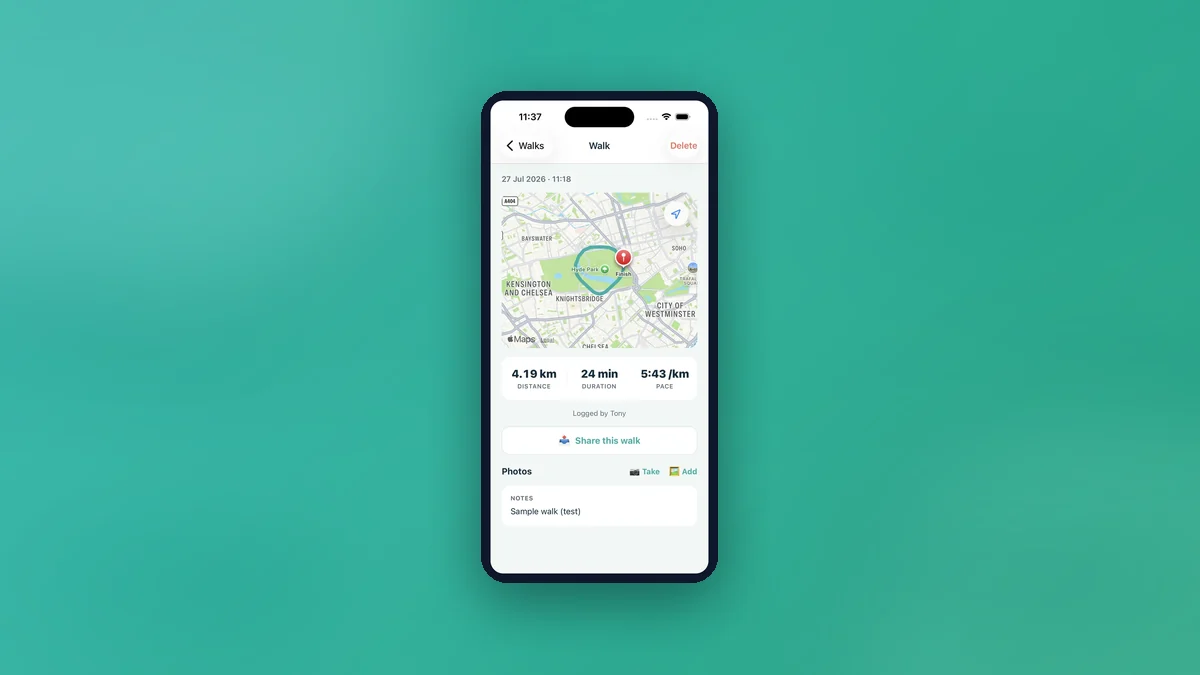
Distance and duration are the easy things to record and the least useful when something goes wrong. What a vet asks about six weeks later is almost always something else: when the limp started, whether it happens after long walks, what he ate off the ground, when the coughing began. Those are notes, not numbers.
The numbers, briefly
Distance, duration, pace and route are worth having, and worth having automatically rather than by hand. CorePaw's walk tracker records all four with a live map, keeps tracking with the screen off, and files each walk in the dog's history with totals building up over time. If you forget to press start, a manual entry with distance and duration goes into the same history — it simply has no route map.
That is the boring part, and the point of automating it is so you have attention left for the rest.
The notes that turn out to matter
Worth jotting on the walk itself, while you remember:
- Anything physical. A limp, a stumble, a reluctance on stairs, licking a paw, a cut pad. Note which leg — you will not remember which leg.
- Anything eaten. Dogs eat things. Recording what and roughly when is genuinely useful if they are unwell that evening.
- Toilet detail if it was unusual. It is the least glamorous and most frequently asked-about observation in veterinary medicine.
- Heat, terrain and surface. Hot pavement, deep mud, shingle and long grass all produce their own problems.
- Behaviour. Unusual reactivity, a scare, a bad encounter — relevant to training and sometimes to health.
- Ticks and what you found. Where on the body, and whether it was removed cleanly.
Photos as a record, not just a memory
A photo of a cut pad taken on the day is worth more than a description given a week later. Photos taken from the walk screen attach to that walk and flow into the gallery tagged as taken on a walk, so they stay findable rather than dissolving into your camera roll.
If something needs watching rather than just noting, the symptom diary is the better home: a title, where on the body, a status of active, monitoring or resolved, and a dated photo timeline with optional measured sizes in millimetres. Showing a vet how a lump has changed over three weeks is a substantially different consultation from describing it.
Why it matters more with several walkers
In a household where two or three people walk the dog, observations fragment. One person sees the limp on Tuesday, another sees it on Saturday, and because neither mentions it, nobody realises it has been going on a fortnight. Every CorePaw entry is stamped with who logged it, so the history is one story rather than three partial ones.
The same applies if you use a walker on CorePaw Pro: their walk arrives in your dog's history with the route, the diary of what happened — wee, poo, play, treat, a photo — and who logged it.
Where it ends up
The symptom diary, with its photos, is embedded in the vet health summary PDF, alongside identity, microchip, latest weight and body condition score, allergies, health history and current medications. Built on your device, works offline, free for everyone.
General information about record-keeping, not veterinary advice.
Related articles
Keep your pet's whole record in CorePaw.
Passport, microchip, vaccinations, medications, walks and weight — working offline and shared with your household. Free for your first pet, on iPhone and Android.