UK Microchipping Rules for Dogs and Cats
Both dogs and cats must be microchipped and registered in England. What the law asks of you, and the part owners most often get wrong.
By Tony Dalton · Updated
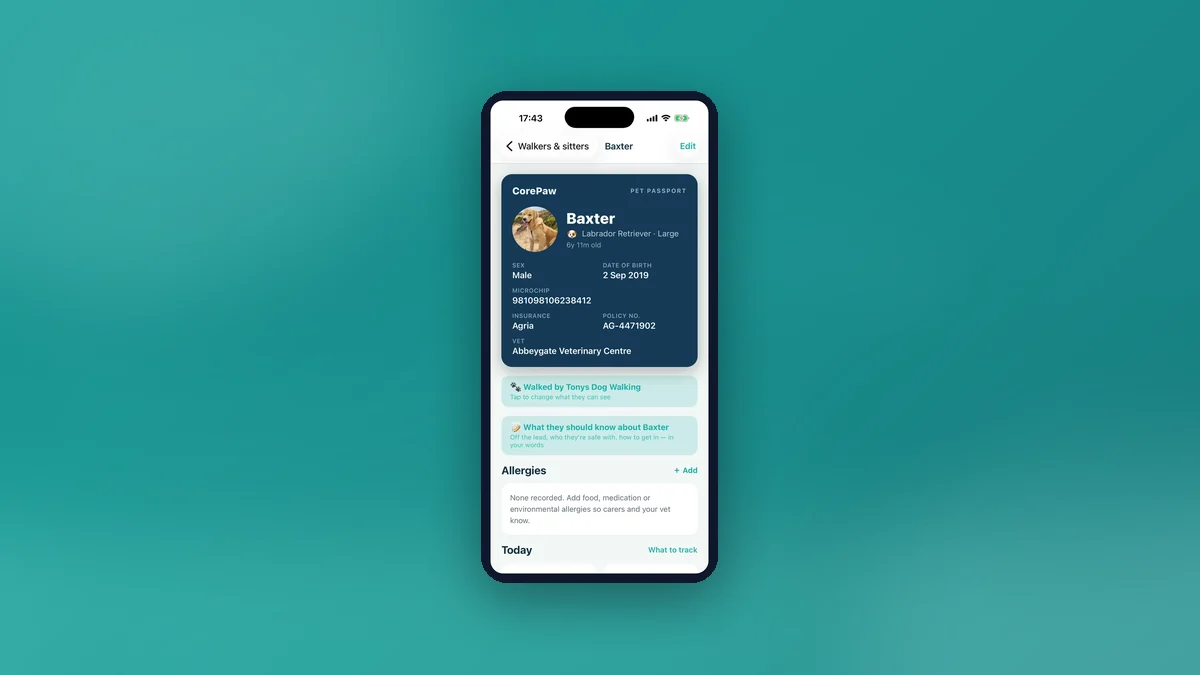
In England, dogs must be microchipped and registered on a compliant database, and since June 2024 the same requirement applies to cats. The chip alone is not enough: the law is about the chip and the registered contact details being correct. That second half is where most owners fall down, and it is the half that actually reunites you with your animal.
What a microchip does and does not do
A microchip is not a tracker. It has no battery, no GPS and no signal. It is a passive transponder about the size of a grain of rice that, when a scanner is passed over it, returns a fifteen-digit number and nothing else. That number is only useful if it is registered to contact details somebody can reach.
So a chipped dog whose registration still lists a phone number from two houses ago is, in the only sense that matters, an unchipped dog.
The details that need to be current
Databases vary, but you are generally keeping current:
- Your name
- Your address
- At least one phone number that actually rings
- An email address you still read
- Often an alternative or emergency contact
Every one of those changes over a pet's lifetime, and none of them prompt you to update anything.
Knowing which database you are on
There are several compliant databases in the UK, and your pet is on exactly one of them — usually whichever the breeder, rescue or implanting vet used. Owners routinely do not know which. If you are not sure, a vet can scan the chip and a lookup service will tell you which database holds that number, though not your details.
Write the answer down when you find it. It is the single hardest piece of information to recover in a hurry, and you will need it precisely when you are least able to research calmly.
Recording the chip properly
CorePaw keeps a full microchip record: the number, the registration database, the registration status (registered, not registered, transfer pending, unknown), the implant date, the manufacturer, the clinic that implanted it, and the owner contact details registered against it. You can attach a photo of the certificate too.
Two features exist specifically for the problem described above. An annual verify registration action stamps the date you last confirmed your details were correct and anchors a yearly reminder, with the pet screen flagging when it is due or overdue — because nothing else in your life will ever prompt you to check. And a chip-check log records each time a vet scans the chip and whether it read cleanly, building a history that the chip is present and readable rather than migrated or failed.
When ownership changes
If you rehome a pet, or take one on, the registration needs transferring — a new chip is not implanted and the number does not change. The transfer is done through whichever database holds the record, and the status is worth tracking while it is in progress, which is why "transfer pending" is one of the options CorePaw records.
See also: how to check your pet's chip is actually registered to you.
General information, not legal advice. Requirements differ across England, Scotland, Wales and Northern Ireland and change over time — check the current rules for where you live.
Related articles
Keep your pet's whole record in CorePaw.
Passport, microchip, vaccinations, medications, walks and weight — working offline and shared with your household. Free for your first pet, on iPhone and Android.