Moving House: The Pet Admin People Forget
A house move breaks four things at once for a pet: chip registration, vet practice, insurance address and who holds the paperwork. A short checklist.
By Tony Dalton · Updated
Moving house quietly invalidates most of your pet's paperwork on the same day. The microchip registration, the vet practice, the insurance policy address and the emergency contact details all become wrong at once, and none of them will tell you. Here is the short list, in the order that matters if the animal goes missing in the first fortnight.
1. The microchip registration, first and immediately
This is the one with real consequences. Pets escape disproportionately in the days after a move — unfamiliar house, unfamiliar garden, doors propped open by removal firms. A chip pointing at your old address during exactly that window is the worst possible timing.
Update it before moving day if you can. You need the fifteen-digit number and to know which database holds it; how to check your pet's chip registration covers both.
2. Your insurer
Pet insurance is usually priced partly on postcode, so the address is not merely administrative. Tell them, and be aware the premium may change at renewal.
3. Registering with a new practice
Do this before you need it, not during an emergency. A new practice will want the history: vaccinations with dates and products, ongoing medications, known allergies, chronic conditions, and recent weights. Your old practice can transfer records, but that takes a few days and needs your request.
What speeds this up dramatically is turning up with the history yourself. CorePaw's vet health summary is a one-tap printable PDF containing identity and microchip details, latest weight and body condition score, allergies, the full health-record history, current medications and the symptom diary with photos. It is built on your device and works offline, which matters when you have no broadband yet.
4. The things only one person knows
A move is when the invisible knowledge in a household becomes visible: which food he actually eats, that she cannot have chicken, that the tablet is with breakfast not dinner, which vet you use, what the insurance policy number is. Usually one person holds all of it.
With CorePaw household sharing, that knowledge is on more than one phone. Allergies sit right under the passport with severe ones flagged in red. The food library records brands, portions and which foods are marked avoid. Medication courses show what is due and who last gave it.
5. The paperwork itself
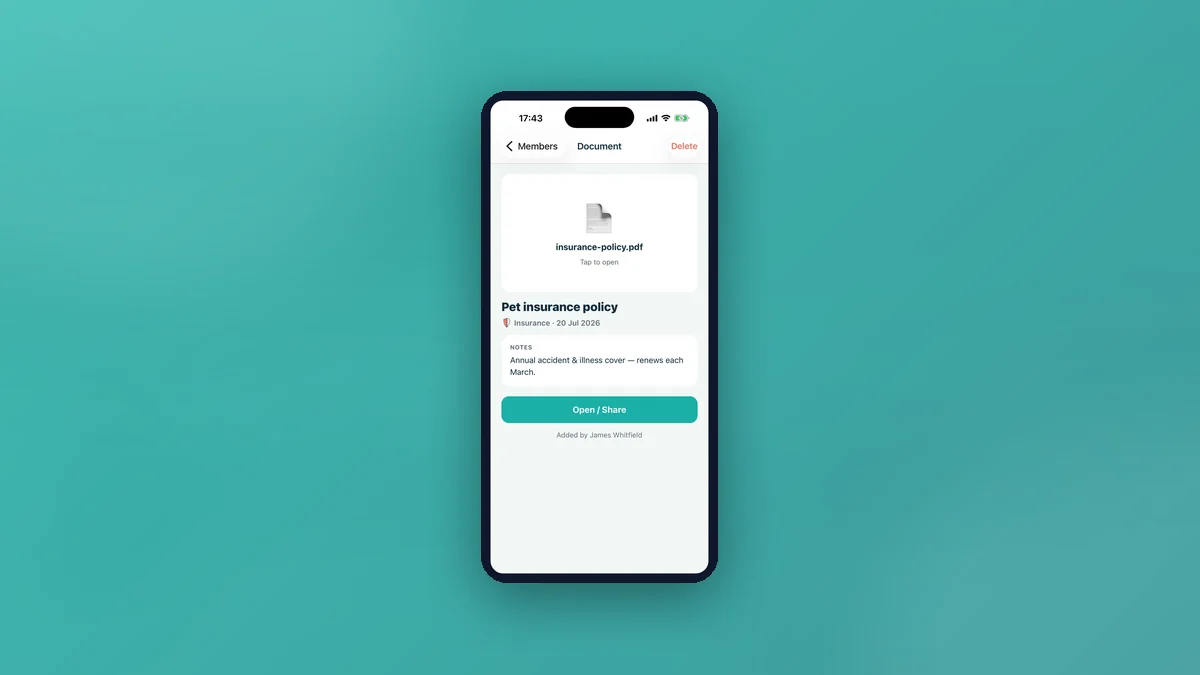
Pedigree certificates, adoption papers, insurance documents and vet letters are exactly the sort of thing that ends up in an unlabelled box for eight months. Photograph them before they go in the van. CorePaw's documents vault files them by category with dates and notes; on the free tier the details sync and the file stays on the device that added it, and with CorePaw Cloud the file itself uploads so the rest of the household can open it.
6. Settling in
Cats in particular are usually kept in for a period after a move. If your cat's living environment changes — an outdoor cat becoming an indoor one, or the reverse — that is worth updating on the passport, because it changes the parasite and vaccination conversation with a new vet who has never met the animal.
General information about admin and record-keeping, not veterinary or legal advice.
Related articles
Keep your pet's whole record in CorePaw.
Passport, microchip, vaccinations, medications, walks and weight — working offline and shared with your household. Free for your first pet, on iPhone and Android.